
NX-Otica Kit (Pair)
Price range: $3,069.00 through $3,840.00
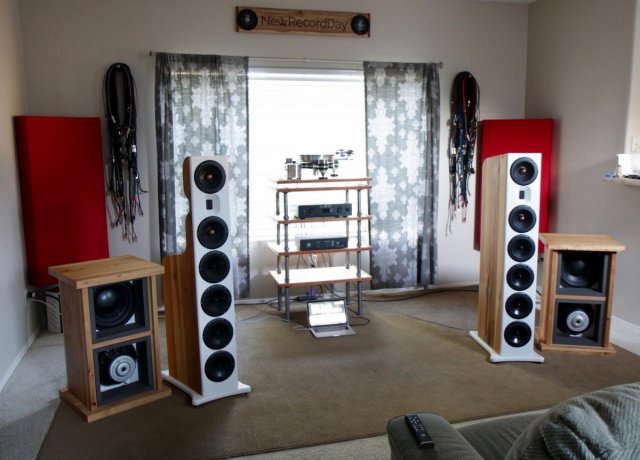
The NX-Otica is a pinnacle of open baffle loudspeaker designs. This model excels in all areas from top to bottom, and can compete with or be compared with any speaker at any price point.
The price of this kit includes the cost of flatpack for this speaker, along with the shipping costs for the flatpack within the USA & Canada.
Additional funds may be required for shipping the flatpack to other international locations, and there is now a duty imposed on wood products coming into the US from Canada. Duty is in the $270 range.
Shipping/Duty/Taxes for the rest of the kit (drivers, crossover parts, etc.) are not included in the price.
Speaker Dimensions:
L: 20″
W: 17″
H: 54″
Efficiency: 93dB @1W/1M
Frequency range: 50Hz-20KHz
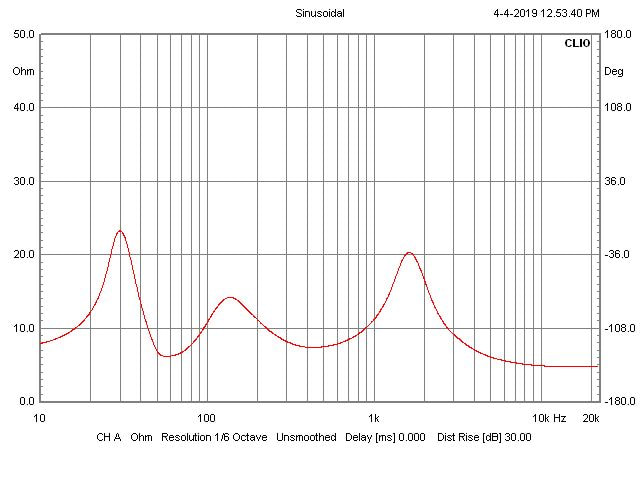
Impedance: 8 ohm (4.8 ohm minimum)
This kit includes 5 sheets of NoRez.
The flatpacks for this kit ship separately from Canada, so they may arrive at a different time from the kit.
The NX-Otica is a pinnacle of open baffle loudspeaker designs. This model excels in all areas from top to bottom, and can compete with or be compared with any speaker at any price point.
The NX-Otica derived from a model called the X-Otica. The X-Otica is to be the next model up in the X -Series product line. See the development here: https://www.audiocircle.com/index.php?topic=138007.0 Testing of the prototypes with pictures are on page 2. The next thought was to replace the tweeter with the Neo 3 pdr tweeter to make the whole speaker full open baffle from top to bottom. And then offset the tweeter into a wave guide to time align it to the mids so that it is in phase from both sides (front and back). That is what started the NX models. It was the X-Series model with the Neo tweeter.
The tweeters used are the new GR Neo 3 tweeters. The mids used are the 16 ohm M165NQ drivers that were designed just for this type of open baffle application. And covering the lower ranges are four standard M165 woofers wired in a series/parallel configuration.
Sensitivity is 93db and the impedance is a nominal 8 ohm load. So they can be easily driven with small tube amps or chip amps.
The 1.5" deep wave guide for the tweeter offsets the playing surface of the tweeter to be physically aligned to the voice coils of the mid-bass drivers. So the drivers are in phase on both sides of the speaker. The wave guide also helps to control the directivity of the tweeter and produces a very even and consistent response in all directions. The wave guide also allows for a low crossover point to the mid-bass drivers. So vertical off axis movements don't cause time delayed cancellation. This makes the vertical and horizontal off axis responses very even and consistent.
Testing and development of the concept started here: https://www.audiocircle.com/index.php?topic=138009.0
Final prototype testing and pricing of the kit can be seen here as well as measured responses: https://www.audiocircle.com/index.php?topic=141654.0
Here is a NX-Otica build thread:https://www.audiocircle.com/index.php?topic=143221.0 There are quite a few builds out there.
NX-Otica's in black with dual servo subs per side: https://www.audiocircle.com/index.php?topic=139480.msg1645451#msg1645451
And here are some links to variations available: https://www.audiocircle.com/index.php?topic=153434.msg1640026#msg1640026
The -3db of the bottom end will vary from room to room and can be as low as mid 40's or as high as high 70's.
For handling the lower ranges our open baffle servo subs are highly recommended. See our open baffle servo sub packages here.
CNC cut flat packs for our servo subs are also available. See them here: https://www.audiocircle.com/index.php?topic=139480.0
The flat packs are shipped from Canada and there is now a duty imposed on wood products coming from Canada. So expect duty to be paid on the delivery of the flatpack in the $270 range.
Additional information
| Weight | 65 lbs |
|---|---|
| Dimensions | 22 × 17 × 17 in |
| Sonicap Upgrade for Mid Circuit | None, Sonicaps |
| Foil Inductor Upgrade for Mid Circuit | None, Foil Inductors |
3 reviews for NX-Otica Kit (Pair)
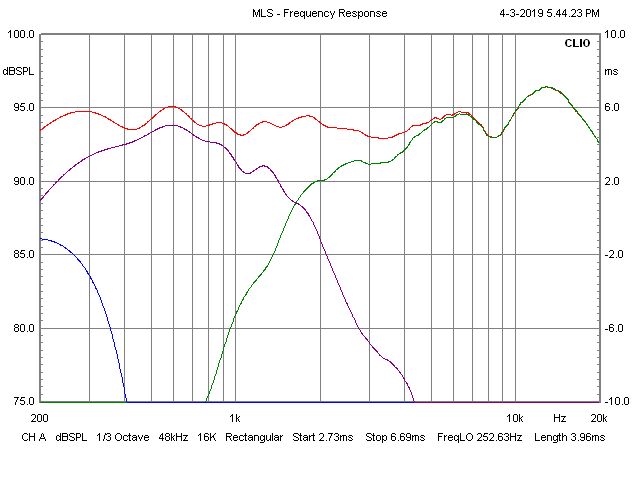
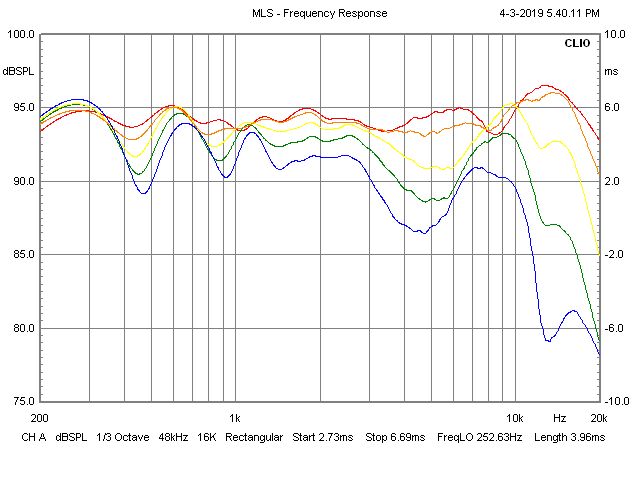
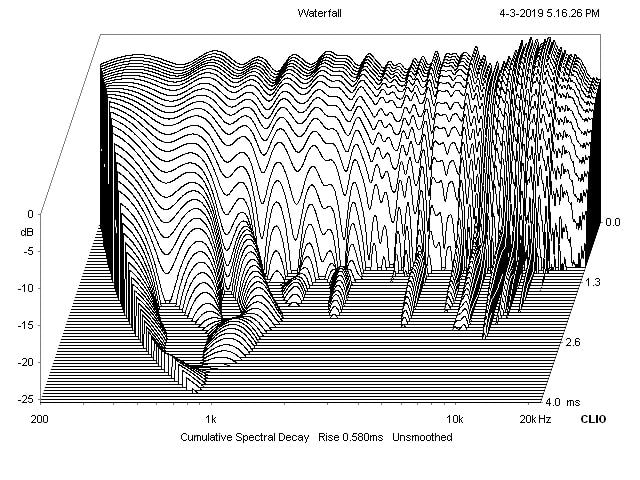
Crossover Response
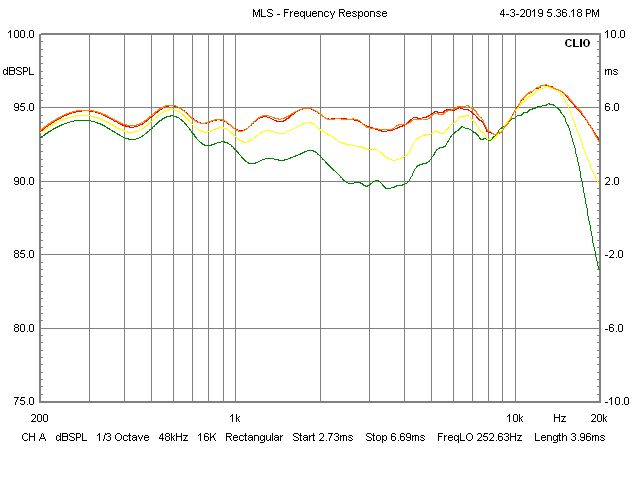
Horizontal Off Axis


NX-Otica Kit (Pair)
Price range: $3,069.00 through $3,840.00
The NX-Otica is a pinnacle of open baffle loudspeaker designs. This model excels in all areas from top to bottom, and can compete with or be compared with any speaker at any price point.
The price of this kit includes the cost of flatpack for this speaker, along with the shipping costs for the flatpack within the USA & Canada.
Additional funds may be required for shipping the flatpack to other international locations, and there is now a duty imposed on wood products coming into the US from Canada. Duty is in the $270 range.
Shipping/Duty/Taxes for the rest of the kit (drivers, crossover parts, etc.) are not included in the price.
Speaker Dimensions:
L: 20″
W: 17″
H: 54″
Efficiency: 93dB @1W/1M
Frequency range: 50Hz-20KHz
Impedance: 8 ohm (4.8 ohm minimum)
This kit includes 5 sheets of NoRez.
The flatpacks for this kit ship separately from Canada, so they may arrive at a different time from the kit.
The NX-Otica is a pinnacle of open baffle loudspeaker designs. This model excels in all areas from top to bottom, and can compete with or be compared with any speaker at any price point.
The NX-Otica derived from a model called the X-Otica. The X-Otica is to be the next model up in the X -Series product line. See the development here: https://www.audiocircle.com/index.php?topic=138007.0 Testing of the prototypes with pictures are on page 2. The next thought was to replace the tweeter with the Neo 3 pdr tweeter to make the whole speaker full open baffle from top to bottom. And then offset the tweeter into a wave guide to time align it to the mids so that it is in phase from both sides (front and back). That is what started the NX models. It was the X-Series model with the Neo tweeter.
The tweeters used are the new GR Neo 3 tweeters. The mids used are the 16 ohm M165NQ drivers that were designed just for this type of open baffle application. And covering the lower ranges are four standard M165 woofers wired in a series/parallel configuration.
Sensitivity is 93db and the impedance is a nominal 8 ohm load. So they can be easily driven with small tube amps or chip amps.
The 1.5" deep wave guide for the tweeter offsets the playing surface of the tweeter to be physically aligned to the voice coils of the mid-bass drivers. So the drivers are in phase on both sides of the speaker. The wave guide also helps to control the directivity of the tweeter and produces a very even and consistent response in all directions. The wave guide also allows for a low crossover point to the mid-bass drivers. So vertical off axis movements don't cause time delayed cancellation. This makes the vertical and horizontal off axis responses very even and consistent.
Testing and development of the concept started here: https://www.audiocircle.com/index.php?topic=138009.0
Final prototype testing and pricing of the kit can be seen here as well as measured responses: https://www.audiocircle.com/index.php?topic=141654.0
Here is a NX-Otica build thread:https://www.audiocircle.com/index.php?topic=143221.0 There are quite a few builds out there.
NX-Otica's in black with dual servo subs per side: https://www.audiocircle.com/index.php?topic=139480.msg1645451#msg1645451
And here are some links to variations available: https://www.audiocircle.com/index.php?topic=153434.msg1640026#msg1640026
The -3db of the bottom end will vary from room to room and can be as low as mid 40's or as high as high 70's.
For handling the lower ranges our open baffle servo subs are highly recommended. See our open baffle servo sub packages here.
CNC cut flat packs for our servo subs are also available. See them here: https://www.audiocircle.com/index.php?topic=139480.0
The flat packs are shipped from Canada and there is now a duty imposed on wood products coming from Canada. So expect duty to be paid on the delivery of the flatpack in the $270 range.
Additional information
| Weight | 65 lbs |
|---|---|
| Dimensions | 22 × 17 × 17 in |
| Sonicap Upgrade for Mid Circuit | None, Sonicaps |
| Foil Inductor Upgrade for Mid Circuit | None, Foil Inductors |
3 reviews for NX-Otica Kit (Pair)
-
Oh my god, these sound incredible. This was my first diy kit, and I didn’t do a perfect job. But I learned a lot! And it turned out great. Super easy instructions. Right now, I use these without a sub in a small room, and I get plenty of bass. Sadly, I’m running these puppies off super cheap equipment at the moment. Just a dragonfly cobalt and cheap 60 w nad amp. Works good though! I’ve literally cried tears of joy while listening to these speakers. And it kinda blows my mind to think that using better equipment and better room treatment will make these sound even better than they already do. Maybe at some times, they can be a little bright, but I attribute most of that to my room layout and dac. Once I switched to streaming off a Mac mini, a lot of that brightness went away, so I’d say overall, highs, mids, and bass are spot on! You’ll probably need a sub if you have a big room. Looking forward to building some servo subs to pair with these. And my next project will be those Bullies! 😀
I highly recommend -
I’ve purchased the Nx Oticas about 3 years ago. It took a while to build but mostly because I didn’t have much time to devote to them. It took about 7 months to build but once I completed them. I was not disappointed.
I must say, these speakers are a like a chameleon. They put forth what your gear can deliver. I agree with Danny on his statement that he would put these against any speaker at any price. I’ve listened to focal, Wilson audio, sonus fabre, and many more at my local Hi Fi store. In regards to realism, soundstage and imagine, there is no comparison. These produce an insanely large soundstage that fills the room with a three dimensional holographic soundstage that encompasses 360. The imaging is pin point accurate.The best way I can describe them is unimaginably magical.
-
I have posted a couple of building tips over at Audio Circle under the NX build thread. They may help with some folks sitting on the fence thinking that they don’t want to have the hassle of a diy build. For that reason I will focus here on the final sound of these speakers.
For reference I have been using open baffle speakers for 15 years and Magnepan speakers (3.7) for about 15 before that. The open baffles were based on a Bastanis design which I modified over several iterations. They still sound really good but had a design which put a limit on how good or great they could sound.
I use discs, files and streaming for sources.
I have built my tube amplifiers and preamps from scratch after modifying others for a few years. I have recently switched to very good Class D amps. I have been in the hobby for about 50 years.
I have watched Danny’s videos for a while now and I found the engineering backed design appealing. Seeing just how many commercial products had significant flaws was eye-opening but frankly not surprising. Having been to most of the RMAF shows I really was surprised how much I disliked so many modern designs. Quite often I would leave a room or even the entire show wondering how people would listen for more than an hour to the systems.
Of course, Danny’s designs are modern but careful design of the drivers, baffles, and crossovers have produced what in my opinion are really great speakers. They go surprisingly low in my room but I use a GR sub which I built a long time ago. The integration of the various drivers is very well done. Very smooth handover between drivers.
As expected, soundstage is well laid out both with depth and width. Lots of fun to be sure. The bass drivers took some time to break in but nothing out of the ordinary.
Every genre of music has been a joy to listen to.
I am trying to not use the standard audiophile descriptors just because after all these years they’re like a ”pop” on an LP. Like a small jolt each time I read them. Basically, this review is just a simple description of a great speaker which to me is an antidote to hyper detailed speakers without being soft and indistinct in order to hide flaws or to provide a nostalgic presentation.
After having built a decent amount of gear my recommendation is to go for the upgraded parts. No matter where I have used them it was always audible in the best way. Don’t be put off by people using the derisive term ”boutique” parts. They can help the design reach its proper limit.
I will post one build tip here. For all the work being done with regards to vibration control in our hobby, IMO we tend to allow speaker crossover parts to be mounted too rigidly to the component with be far the highest vibrations in the system. I mounted all of the parts except resistors on pieces of No-Res to allow significant isolation from the speaker frame.
I read this review but I don’t feel as though I really got my point across fully. The most concise thing I can write is that they are fun! I listen to lots of different genres but they are all fun. If you can smile with appreciation and surprise that to me is a huge win.


Crossover Response
Horizontal Off Axis

Jayden Nielson (verified owner) –
Oh my god, these sound incredible. This was my first diy kit, and I didn’t do a perfect job. But I learned a lot! And it turned out great. Super easy instructions. Right now, I use these without a sub in a small room, and I get plenty of bass. Sadly, I’m running these puppies off super cheap equipment at the moment. Just a dragonfly cobalt and cheap 60 w nad amp. Works good though! I’ve literally cried tears of joy while listening to these speakers. And it kinda blows my mind to think that using better equipment and better room treatment will make these sound even better than they already do. Maybe at some times, they can be a little bright, but I attribute most of that to my room layout and dac. Once I switched to streaming off a Mac mini, a lot of that brightness went away, so I’d say overall, highs, mids, and bass are spot on! You’ll probably need a sub if you have a big room. Looking forward to building some servo subs to pair with these. And my next project will be those Bullies! 😀
I highly recommend
Don Stockman –
I’ve purchased the Nx Oticas about 3 years ago. It took a while to build but mostly because I didn’t have much time to devote to them. It took about 7 months to build but once I completed them. I was not disappointed.
I must say, these speakers are a like a chameleon. They put forth what your gear can deliver. I agree with Danny on his statement that he would put these against any speaker at any price. I’ve listened to focal, Wilson audio, sonus fabre, and many more at my local Hi Fi store. In regards to realism, soundstage and imagine, there is no comparison. These produce an insanely large soundstage that fills the room with a three dimensional holographic soundstage that encompasses 360. The imaging is pin point accurate.
The best way I can describe them is unimaginably magical.
A. J. (verified owner) –
I have posted a couple of building tips over at Audio Circle under the NX build thread. They may help with some folks sitting on the fence thinking that they don’t want to have the hassle of a diy build. For that reason I will focus here on the final sound of these speakers.
For reference I have been using open baffle speakers for 15 years and Magnepan speakers (3.7) for about 15 before that. The open baffles were based on a Bastanis design which I modified over several iterations. They still sound really good but had a design which put a limit on how good or great they could sound.
I use discs, files and streaming for sources.
I have built my tube amplifiers and preamps from scratch after modifying others for a few years. I have recently switched to very good Class D amps. I have been in the hobby for about 50 years.
I have watched Danny’s videos for a while now and I found the engineering backed design appealing. Seeing just how many commercial products had significant flaws was eye-opening but frankly not surprising. Having been to most of the RMAF shows I really was surprised how much I disliked so many modern designs. Quite often I would leave a room or even the entire show wondering how people would listen for more than an hour to the systems.
Of course, Danny’s designs are modern but careful design of the drivers, baffles, and crossovers have produced what in my opinion are really great speakers. They go surprisingly low in my room but I use a GR sub which I built a long time ago. The integration of the various drivers is very well done. Very smooth handover between drivers.
As expected, soundstage is well laid out both with depth and width. Lots of fun to be sure. The bass drivers took some time to break in but nothing out of the ordinary.
Every genre of music has been a joy to listen to.
I am trying to not use the standard audiophile descriptors just because after all these years they’re like a ”pop” on an LP. Like a small jolt each time I read them. Basically, this review is just a simple description of a great speaker which to me is an antidote to hyper detailed speakers without being soft and indistinct in order to hide flaws or to provide a nostalgic presentation.
After having built a decent amount of gear my recommendation is to go for the upgraded parts. No matter where I have used them it was always audible in the best way. Don’t be put off by people using the derisive term ”boutique” parts. They can help the design reach its proper limit.
I will post one build tip here. For all the work being done with regards to vibration control in our hobby, IMO we tend to allow speaker crossover parts to be mounted too rigidly to the component with be far the highest vibrations in the system. I mounted all of the parts except resistors on pieces of No-Res to allow significant isolation from the speaker frame.
I read this review but I don’t feel as though I really got my point across fully. The most concise thing I can write is that they are fun! I listen to lots of different genres but they are all fun. If you can smile with appreciation and surprise that to me is a huge win.